


Losing a pet is something you can get through, even if it feels impossible at first. Grief is real and valid, and there is no reason to feel ashamed of it or to rush through it. The best way to cope is to give yourself permission to grieve, seek support from those close to you, and find your own way to honor the memory of your beloved pet. In this article, we walk through the stages of grief, how to support children, and meaningful ways to remember a pet.
Why can losing a pet feel just as hard as losing a person?
Losing a pet can feel just as hard as losing a person because a pet is a genuine member of the family — one with whom you share daily life, emotions, and closeness. The bond with a pet is often unconditional and mutual. A pet does not judge, betray, or leave. It is there every single day, and its absence is immediately felt in everything.
The intensity of grief does not depend on whether the one who died was a person or an animal. It depends on how important the relationship was. For many people, a pet has been a best friend, a source of comfort during difficult times, or their only daily companion. When that bond is broken, it leaves a real void in life.
Society does not always acknowledge the loss of a pet with the same seriousness as the death of a person. This can make grieving pet owners feel as though their emotions are exaggerated. They are not. The death of a pet is a genuine loss, and it deserves genuine time to grieve.
What stages of grief can be expected after a pet’s death?
After a pet’s death, you can expect to experience stages of grief similar to those following any significant loss: shock and denial, longing, anger or guilt, depression, and ultimately acceptance. These stages do not follow a set order, and you may experience several different emotions within the same day.
At first, many people feel a sense of shock. Even if a pet had been ill for a long time, the death can still feel unreal. In the days that follow, the longing grows stronger: you find yourself listening for a familiar sound, scanning the sofa for a well-known shape, or reaching for a second bowl out of old habit.
Guilt is especially common when the decision had to be made to euthanize a pet. Many people wonder whether they made the right choice, or whether they acted too soon or too late. In most cases, this decision is made out of love and a sense of responsibility. It is one of the hardest things a pet owner can face, and it deserves compassion, not self-blame.
Over time, grief changes in form. It does not necessarily disappear entirely, but it becomes more bearable. Memories begin to feel more warm than painful.
How can children be supported in processing a pet’s death?
Children can be supported in processing a pet’s death by speaking honestly, in an age-appropriate way, and by giving them permission to grieve openly. Do not hide the truth or use vague expressions such as “went to sleep” or “went away,” as these can cause confusion or a fear of sleeping.
Tell the child directly that the pet has died and that this means it will not be coming back. This is hard to say, but clarity helps the child understand the situation and begin to grieve. Allow the child to ask whatever comes to mind, and answer honestly.
Give the child an active role in remembering. They can draw a picture of the pet, write in a memory book, or help organize a small memorial. Concrete actions help process grief and give the child a sense that they too can express their love for the pet.
Keep an eye on the child’s behavior over the following weeks. Some children process grief outwardly, while others withdraw. Both are normal. If a child begins to show prolonged difficulties at school or with sleep, it may be worth considering professional support.
When should you seek professional help for grief?
You should seek professional help for grief if it is preventing you from functioning normally in daily life for more than a few weeks, causing persistent insomnia, social withdrawal, or feelings that life is not worth living. Grief is normal, but prolonged or paralyzing grief is a sign that you need support.
Ordinary grief comes in waves: some days are better, some are worse. If the difficult days show no sign of easing over time, or if everyday routines feel impossible weeks later, that is a sign that a professional can help.
Both general mental health services and peer support groups specifically focused on pet loss are available. Simply talking with someone who understands the weight of losing a pet can already make a significant difference. Online discussion groups can also provide a community where you can share your experiences without fear of judgment.
How can a pet be remembered in a meaningful and eco-friendly way?
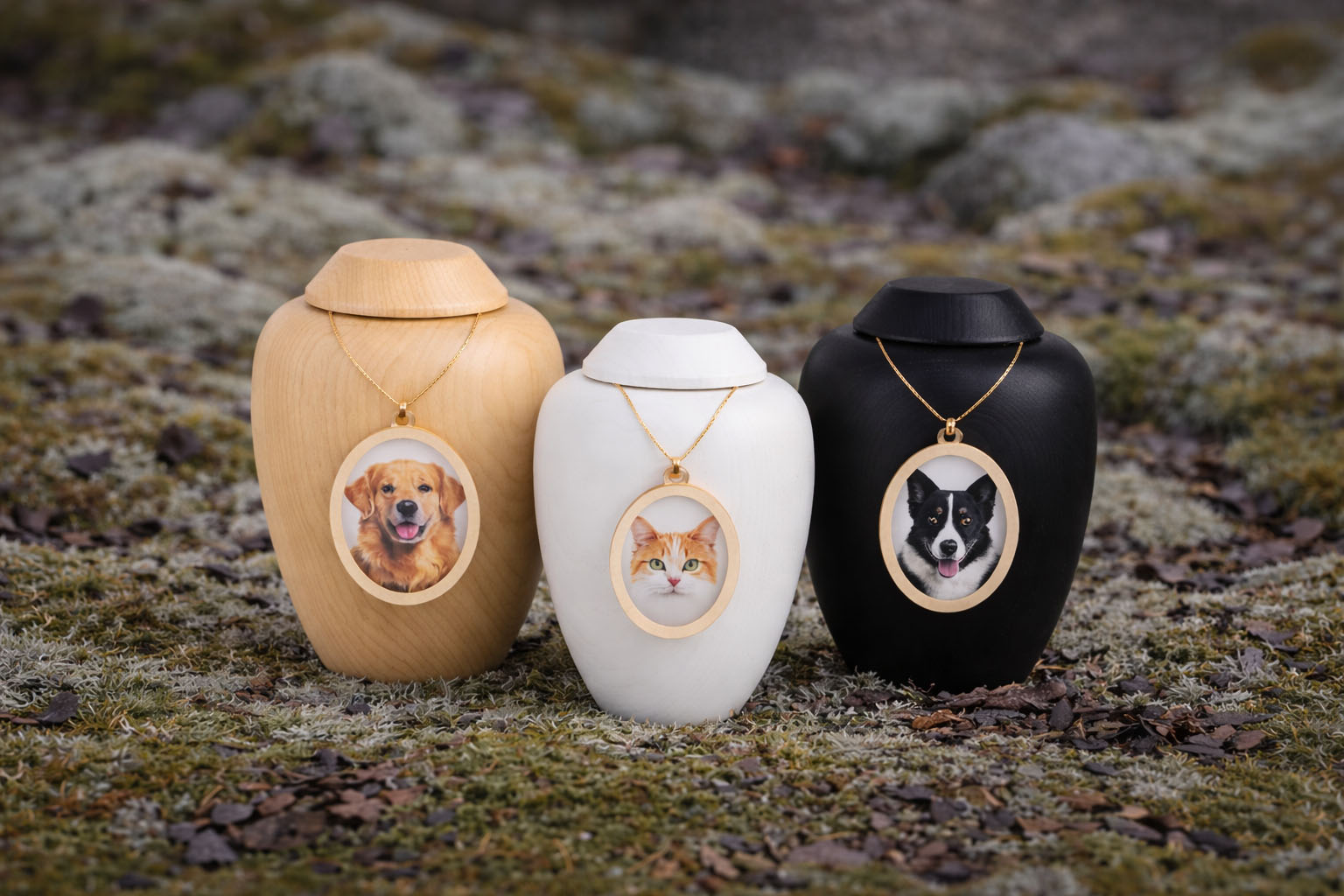
A pet can be remembered in a meaningful and eco-friendly way by choosing a memorial object made from sustainable, renewable materials — one that can serve as a lasting keeper of memory within your home. An eco-friendly wooden urn for a pet is one such option: beautiful, timeless, and responsibly crafted.
The eco-friendliness of a wooden urn comes above all from the material itself: wood is a renewable natural material that biodegrades naturally after burial, leaving no permanent residue in the soil. This is an important distinction compared to many other urn materials.
At Kuurna Design, we craft wooden urns through Finnish joinery, combining handcraft with machine production. The urns are finished with wax, which protects the wood and gives it a beautiful surface. Wax breaks down more slowly than wood, but the amount used in each product is very small and does not significantly diminish the urn’s overall environmental credentials.
A wooden urn is not simply a container for ashes. It is a memorial object that can live in your home for years — on a shelf or in a special place — as a reminder of a beloved pet. Burial is not an obligation. Many people keep a wooden urn indoors and find it a comforting presence in the home. If you do wish to bury the urn at a later point, a wooden urn is a fitting choice, as wood biodegrades naturally.
What size urn is needed for a pet?
The size of the urn is determined by the pet’s weight. As a general guideline, approximately one liter of space is needed for every 10–15 kg of body weight. We offer urns in four sizes:
- 0.5 l — for small pets (under 10 kg)
- 1.0 l — for medium-sized pets (10–20 kg)
- 1.5 l — for medium-large pets (20–30 kg)
- 2.0 l — for large pets (over 30 kg)
If you are unsure between two sizes, it is better to choose the slightly larger wooden urn to be safe.
What other ways are there to remember a pet?
In addition to a wooden urn, there are many other ways to honor a pet’s memory. You can plant a tree or shrub in their memory, create a photo album or memory book, or commission a piece of artwork based on a photo of your pet. Some people make a donation to an animal welfare organization in the pet’s name. What matters most is that the way you choose to remember them feels right to you.
When is the right time to get a new pet?
The right time to get a new pet is when it feels right to you personally — there is no single correct timeline. Some people are ready after a few months, others not until years later, and some never are. All of these are entirely valid choices.
Getting a new pet does not mean you are replacing the one you lost, or that your grief is over. It means you are ready to open your heart to a new relationship. Many people find that a new pet does not erase the feeling of longing, but brings new joy and purpose to everyday life.
A few questions worth reflecting on before getting a new pet:
- Do you want a new pet for your own sake, or to escape the grief?
- Is your home and current life situation ready for the needs of a new pet?
- Have you worked through enough of your grief to give a new pet a fair chance?
Do not let other people’s opinions or timelines guide your decision. You know best when you are ready. If you have any questions about choosing an urn, you are welcome to get in touch with the Kuurna Design team.